
Turnstiles, gate control

Securing the Crowd Part Three: How Kenton Brothers Systems for Security Guides You Through the Process

By David Strickland, COO of Kenton Brothers

This is part one of a three part series on CISA recommendations related to securing a crowd.
(Part One | Part Two | Part Three)

Securing the Crowd Part Three: How Kenton Brothers Systems for Security Guides You Through the ProcessAt Kenton Brothers, we have spent decades building security solutions for organizations across the Midwest and beyond. The CISA Venue Guides are not abstract federal documentation to us; they are a reflection of best practices we have been implementing for clients for years, now codified in a format that gives every organization a shared framework to work from.

Here is how we engage with venue operators and security leaders to help them align with CISA’s guidance from start to finish.

Step 1: Security Assessment Aligned to the CISA Framework

We begin every engagement with a thorough, site-specific physical security assessment. Our certified professionals walk your facility, map your existing security ecosystem, and identify gaps using a methodology that maps directly to the CISA Security Considerations Table. You receive a prioritized remediation roadmap that accounts for your budget, your event calendar, and your unique risk profile.

Step 2: Infrastructure Dependency Mapping

Working from the CISA Mitigating Dependency Disruptions guide, our team helps you map your venue’s security-critical systems to the four lifeline sectors. We identify your single points of failure, document your backup capabilities, and help you build contingency procedures your team can actually execute under pressure.

Step 3: Technology Design and Integration

Kenton Brothers designs and integrates the technology stack that brings your security plan to life:

  • Enterprise-grade video surveillance with AI-enabled analytics and behavioral detection.
  • Electronic access control systems with multi-tier credentialing for patrons, staff, vendors, and VIPs.
  • Intercommunication and mass notification systems with redundant pathways.
  • Command center design and integration for centralized situational awareness.
  • Backup power integration and monitoring for all security-critical systems.

Step 4: Commissioning, Training, and Ongoing Support

A security system is only as good as the people who operate it. Kenton Brothers provides comprehensive commissioning services, operator training, and ongoing technical support to ensure your team is confident and competent with every system we install. We also coordinate with your law enforcement partners during commissioning to ensure that our technology integrates seamlessly with first responder workflows.

Step 5: Periodic Review and System Evolution

The threat landscape is not static, and neither is our relationship with our clients. Kenton Brothers conducts periodic system reviews to ensure your security posture keeps pace with evolving threats, changing event profiles, and updated CISA guidance. As new guidance emerges; whether around drone threats, AI surveillance, or new credentialing standards; we bring those updates directly to you.

Kenton Brothers doesn’t just install security systems. We help you build a security culture; one grounded in best practices, powered by the right technology, and ready for whatever comes next.

The Bigger Picture: 2026 and Beyond

The CISA Venue Guides arrive at a moment of extraordinary national significance. The 2026 FIFA World Cup will bring an estimated 6.5 million international visitors to 11 U.S. cities. America’s 250th anniversary celebrations will draw massive crowds to Philadelphia, Washington D.C., and communities across the country. And every one of these events will be managed by venue operators, security directors, local law enforcement, and private security partners who need to be working from the same playbook.

Congressional leaders on the House Committee on Homeland Security have described DHS’s approach as “all-hands on deck”; a whole-of-government effort to ensure these events are safe and successful. The CISA guides are a direct output of that commitment.

But the guidance is explicitly designed to be useful beyond the marquee events. Whether your venue hosts 500 people for a corporate conference or 50,000 for a playoff game, the frameworks in these documents apply. And the themes are universal: layered physical security, infrastructure resilience, coordinated partnerships, and a commitment to continuous improvement.

Kenton Brothers is here to help organizations of every size take those themes and turn them into action.

Ready to Align Your Venue with the CISA Framework?

Contact Kenton Brothers Systems for Security for a comprehensive venue security assessment. Our team of certified professionals is ready to walk your facility, map your risks, and build a security roadmap that aligns with the latest CISA guidance and protects the people who matter most.

References

  • Cybersecurity and Infrastructure Security Agency (CISA). Venue Guides for Security Enhancements and Mitigating Dependency Disruptions. December 2025 / January 2026. https://www.cisa.gov/resources-tools/resources/venue-guides-security-enhancements-and-mitigating-dependency-disruptions
  • U.S. House Committee on Homeland Security. ICYMI: Homeland Republicans Assess Security, Coordination Efforts for Upcoming Mass-Spectator Events. May 2025.
  • Domestic Preparedness. Big Events in 2026: Security Classifications. January 2026.

Securing the Crowd Part Two: Breaking Down the CISA Guide for Mitigating Dependency Disruptions

By David Strickland, COO of Kenton Brothers

This is part one of a three part series on CISA recommendations related to securing a crowd.
(Part One | Part Two | Part Three)

Securing the Crowd Part Two: Breaking Down the CISA Guide for Mitigating Dependency DisruptionsThe CISA Guide for Mitigating Dependency Disruptions addresses something that venue security directors often overlook until it is too late: the critical infrastructure your venue depends on to operate safely. If the power grid fails, if a water main breaks, if cellular communications are disrupted; your security posture is immediately compromised, regardless of how many guards you have on the floor.

CISA identifies four lifeline sectors that stadiums and arenas depend on, and for each one provides a framework for understanding dependencies, assessing vulnerabilities, and building contingency plans.

Lifeline Sector 1: Energy

Power is the foundation of nearly every modern security system. Loss of power means loss of access control systems, loss of surveillance, loss of communications, loss of lighting; and immediate escalation of risk.

CISA recommends venues:

  • Map every security-critical system to its power source and identify single points of failure.
  • Ensure backup generator capacity covers all security and life-safety systems at minimum.
  • Test backup power systems regularly and under simulated load conditions.
  • Develop relationships with your utility provider and understand restoration timelines for your area.

KB TIP: Kenton Brothers assesses power resilience as part of every major security system installation. We ensure that access control, surveillance, intercoms, and communications systems are connected to appropriate backup power sources, and we document these dependencies clearly so your team knows exactly what to do when the grid goes down.

Lifeline Sector 2: Water and Wastewater Systems

Large crowd events place extraordinary demands on water and wastewater infrastructure. Beyond hygiene, water plays a direct role in fire suppression systems that protect patron safety.

Venues should:

  • Know the source and backup sources for your facility’s water supply.
  • Inspect and test fire suppression systems before every major event.
  • Have contingency plans for water service interruption, including alternative sanitation solutions.
  • Coordinate with local utility providers on planned maintenance windows to avoid event-day disruptions.

Lifeline Sector 3: Communications

Communications failures can be catastrophic during an active incident. CISA emphasizes that venues must treat communication infrastructure as a security system in itself.

Key priorities include:

  • Redundant communication pathways for security personnel; radio, cellular, and landline where possible.
  • Dedicated communication channels for coordination with law enforcement and emergency medical services.
  • Public address systems tested and confirmed operational before every event.
  • Digital signage systems capable of displaying emergency instructions throughout the venue.
  • Cellular coverage mapping to identify dead zones that could impair emergency response.

KB TIP: Kenton Brothers integrates intercommunication systems, mass notification platforms, and radio systems that create unified, redundant communication architectures for large venues. We engineer these systems to remain functional even when primary networks are degraded.

Lifeline Sector 4: Transportation

Large events generate transportation surges that can trap patrons inside a venue, prevent emergency vehicles from accessing the site, or create dangerous crowd compression at egress points.

CISA recommends:

  • Pre-event coordination with local traffic management and law enforcement on ingress and egress plans.
  • Clear emergency vehicle access routes that cannot be blocked by patron vehicles or transit disruptions.
  • Crowd flow modeling for all entry and exit points, including evacuation scenario planning.
  • Signage and staff positioning that facilitates orderly egress under normal and emergency conditions.

The CISA Framework in Action: Tips and Tricks for Security Personnel

For the security professionals on the front lines of venue safety, here is a distilled set of practical takeaways from the CISA guides that you can begin applying immediately.

Before the Event

  • Conduct a full walk-through of all access points, security checkpoints, and surveillance camera sightlines 48 hours before any major event.
  • Confirm that all access control systems, cameras, and intercoms are operational and connected to backup power.
  • Brief all security staff on the specific threat scenarios most relevant to the event type; sporting events, concerts, and political gatherings each carry different risk profiles.
  • Coordinate with local law enforcement to confirm communication channels and incident response protocols.
  • Verify that your public address system and digital signage can broadcast emergency instructions in all languages relevant to your expected audience.
  • Check counter-UAS monitoring capabilities if applicable to your venue classification.
  • Ensure patron screening lanes are staffed adequately and tested with the actual equipment being used that day.

During the Event

  • Maintain continuous communication between security command, floor staff, and law enforcement liaisons.
  • Use surveillance AI alerts as an intelligence feed, not a replacement for trained human observation.
  • Position behavioral recognition-trained staff at high-density gathering areas: entry queues, concourse chokepoints, and VIP areas.
  • Monitor all four lifeline systems in real-time; power, water, communications, and transportation egress conditions.
  • Conduct rolling radio checks at defined intervals to confirm all teams are responsive.
  • Know exactly who calls in the incident and through which channel if something goes wrong. Every staff member should know this.

After the Event

  • Conduct a structured after-action review with security leadership, event operations, and law enforcement partners.
  • Document any anomalies, near-misses, equipment failures, or communication gaps;these are your most valuable training data.
  • Update your Security Considerations Table based on lessons observed.
  • Test and recharge all backup power systems.
  • Submit a debrief report to your CISA Regional Security Advisor if applicable.

Continue reading Part Three.

Ready to Align Your Venue with the CISA Framework?

Contact Kenton Brothers Systems for Security for a comprehensive venue security assessment. Our team of certified professionals is ready to walk your facility, map your risks, and build a security roadmap that aligns with the latest CISA guidance and protects the people who matter most.

References

  • Cybersecurity and Infrastructure Security Agency (CISA). Venue Guides for Security Enhancements and Mitigating Dependency Disruptions. December 2025 / January 2026. https://www.cisa.gov/resources-tools/resources/venue-guides-security-enhancements-and-mitigating-dependency-disruptions
  • U.S. House Committee on Homeland Security. ICYMI: Homeland Republicans Assess Security, Coordination Efforts for Upcoming Mass-Spectator Events. May 2025.
  • Domestic Preparedness. Big Events in 2026: Security Classifications. January 2026.


Securing the Crowd Part One: Breaking Down the CISA Venue Guide for Security Enhancements

By David Strickland, COO of Kenton Brothers

This is part one of a three part series on CISA recommendations related to securing a crowd.
(Part One | Part Two | Part Three)

Securing the Crowd Part One: Breaking Down the CISA Venue Guide for Security EnhancementsThe stakes for large venue security have never been higher. As the United States prepares to host the 2026 FIFA World Cup across 11 U.S. cities, celebrate America’s 250th anniversary, and look ahead to the 2028 Summer Olympics in Los Angeles, one federal agency stepped up with guidance that every venue operator, security director, and event manager in the country should be reading right now.

In late December 2025 and into January 2026, the Cybersecurity and Infrastructure Security Agency (CISA);a component of the U.S. Department of Homeland Security; released two landmark publications known collectively as the Venue Guides for Security Enhancements and Mitigating Dependency Disruptions. These documents represent the most comprehensive and actionable federal guidance for stadium and arena security in recent history.

At Kenton Brothers Systems for Security, we have been studying these guides carefully. This blog series breaks down what’s in them, what they mean for your organization, and how our team can help you implement their recommendations from the ground up.

Why These Guides Matter Right Now

The release of these guides was not coincidental. The threat landscape for large public gatherings has shifted dramatically in recent years. From the 2017 Las Vegas Route 91 Harvest Festival shooting; which permanently changed how security professionals think about outdoor venue perimeter security; to the January 1, 2025 New Orleans Sugar Bowl attack, to evolving drone threats over packed stadiums, venue operators are navigating a risk environment that is more complex and more consequential than ever before.

“Today’s risk environment is rapidly evolving, posing serious threats and disruptions to U.S. critical infrastructure and public gathering venues.”; CISA Acting Director Madhu Gottumukkala

DHS and CISA didn’t develop these guides in a vacuum. They drew on lessons learned from real disruptions at high-profile events in the U.S. and internationally, then convened government and industry experts from four critical infrastructure sectors to shape guidance that is both practical and actionable.

The two guides work in tandem:

  • The Venue Guide for Security Enhancements focuses on physical security measures including access control, perimeter protection, patron screening, staffing, and coordinated law enforcement planning.
  • The Venue Guide for Mitigating Dependency Disruptions addresses the often-overlooked infrastructure dependencies that venues rely on; energy, water and wastewater systems, communications, and transportation; and provides frameworks for contingency planning when those systems fail.

Together, they create a blueprint for resilient, layered venue security that goes far beyond having guards at the door.

Breaking Down the CISA Venue Guide for Security Enhancements

This guide establishes a foundational philosophy that security professionals at every level should internalize: effective security is layered, integrated, and never static. Here are the core pillars the guide identifies and what they mean in practice.

1. Site-Specific Physical Security Assessments

CISA’s first recommendation is that every venue conduct a thorough, site-specific physical security assessment. Generic checklists are not sufficient. The guide includes a Security Considerations Table that categorizes measures by implementation difficulty and cost:

  • Low: Measures deployable with existing staff, basic equipment upgrades, and standard training.
  • Medium: Measures requiring moderate investment; new technology, additional staffing, procedural changes.
  • High: Advanced systems and infrastructure requiring significant capital investment and specialized expertise.

This tiered approach ensures that venues of all sizes; from a regional convention center to a 70,000-seat NFL stadium; can identify realistic, proportionate steps to close security gaps.

KB TIP: Kenton Brothers offers comprehensive physical security assessments tailored to your venue’s specific layout, event profile, and threat environment. Our certified security professionals will walk your facility and deliver a prioritized remediation roadmap aligned directly with the CISA framework.

2. Access Control and Perimeter Protection

The guide emphasizes the critical importance of layered perimeter defense. Lessons from the Las Vegas attack; and from international incidents like the 2017 Manchester Arena bombing; underscore that security cannot begin and end at the entry gate.

CISA recommends venues consider:

  • Hardened vehicle barriers and bollard systems at all pedestrian and vehicle access points.
  • Clear delineation of security zones moving from outer perimeter to inner sanctum.
  • Credentialing systems that differentiate between public, staff, vendor, and VIP access levels.
  • CCTV coverage that extends to parking lots, adjacent streets, and rooftop sight lines.
  • Regular review and testing of all access control technology and protocols.

KB TIP: Kenton Brothers is a recognized leader in electronic access control systems integration. We design, install, and maintain credential-based access solutions that can be scaled from a single entry point to enterprise-wide perimeter management. Our team partners with your existing security personnel to ensure seamless operation.

3. Patron Screening and Entry Protocols

Screening is the most visible element of venue security; and one of the most operationally complex. CISA’s guide highlights DHS Science & Technology tools developed specifically to help venues model screening throughput and evacuation simulation so operators can select the methods most likely to work at their specific facility.

Key considerations include:

  • Walk-through magnetometer placement and staffing ratios relative to expected patron volume.
  • Prohibited items policies communicated clearly before and at the event.
  • Bag check protocols, clear bag policies, and secondary screening areas.
  • Accessible screening lanes for individuals with disabilities.
  • Staff training in behavioral recognition and pre-attack indicator identification.

4. Staffing, Training, and Behavioral Recognition

One of the most powerful takeaways from recent high-profile incidents is that technology alone is not enough. Security personnel who are trained to recognize unusual behavior, pre-attack indicators, and individuals who may pose a risk; and who have a clear path to escalation and intervention; represent one of the most effective threat deterrence tools available.

CISA encourages venues to invest in:

  • Regular joint training exercises with local law enforcement and emergency services.
  • Behavioral threat assessment and identification training for all front-line security staff.
  • Clear, rehearsed communication protocols for escalating concerns.
  • Tabletop exercises and scenario planning for active assailant, coordinated attack, and complex emergency scenarios.

KB TIP: Kenton Brothers offers security staff consultation and can connect venue operators with training resources aligned to CISA standards. We regularly coordinate with local law enforcement partners during the design and commissioning of our security systems to ensure human and technology elements work in harmony.

5. Technology Integration: Surveillance, AI, and Real-Time Communication

The CISA guide is emphatic on this point: modern venue security requires sophisticated technological monitoring systems capable of detecting threats before they escalate.

Recommended capabilities include:

  • 24/7 surveillance solutions with artificial intelligence-assisted analytics to identify unusual patterns or crowd anomalies.
  • Real-time communication platforms that push immediate alerts across security teams, event operations, and law enforcement simultaneously.
  • Automated incident response protocols that can be activated the moment a threat is detected.
  • Counter-unmanned aircraft system (counter-UAS) capabilities, particularly for outdoor venues and those hosting nationally significant events.
  • License plate recognition and facial recognition technologies where legally authorized.

CISA notes that drone threats in particular have emerged as a top-tier concern. The proliferation of UAS technology in modern warfare and in everyday consumer life means that venues hosting high-profile events must now plan for aerial threat scenarios in ways that were not previously standard.

KB TIP: Kenton Brothers designs and integrates advanced video surveillance ecosystems featuring AI-enabled analytics, wide-area monitoring, and centralized command center capabilities. Our systems are engineered to grow with your threat environment and integrate directly with communications platforms used by first responders.

Continue reading Part Two.

Ready to Align Your Venue with the CISA Framework?

Contact Kenton Brothers Systems for Security for a comprehensive venue security assessment. Our team of certified professionals is ready to walk your facility, map your risks, and build a security roadmap that aligns with the latest CISA guidance and protects the people who matter most.

References

  • Cybersecurity and Infrastructure Security Agency (CISA). Venue Guides for Security Enhancements and Mitigating Dependency Disruptions. December 2025 / January 2026. https://www.cisa.gov/resources-tools/resources/venue-guides-security-enhancements-and-mitigating-dependency-disruptions
  • U.S. House Committee on Homeland Security. ICYMI: Homeland Republicans Assess Security, Coordination Efforts for Upcoming Mass-Spectator Events. May 2025.
  • Domestic Preparedness. Big Events in 2026: Security Classifications. January 2026.

Kenton Brothers helps the City of Grandview install security cameras at their new amphitheater.
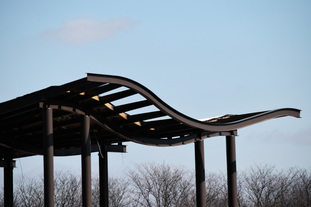
GrandviewAmpKenton Brothers helps the City of Grandview install security cameras a their new amphitheater.


Grandview Amphitheater is just one of many examples of cities going above and beyond to involve their community in the arts. The Grandview Parks and Recreation built an event space in 2014 that has the capacity to entertain 8,000 guests. These amphitheaters engross citizens and surrounding areas in music and create a space for people to come together, and enjoy a common interest. Kenton Brothers had the opportunity to secure that feeling of community, with an advanced security system that helps fun goers to focus on the show and the City of Grandview Amphitheater to feel protected. Kenton Brothers installed a series of high resolution video cameras, throughout the Amphitheater, which help protect against any unwanted emergency situations. Kenton Brothers was thorough to ensure that the space is kept safe with a series of dome, wall mount, and corner camera systems. This technology driven camera system helps to make sure the entire area is kept safe, allowing citizens to check their worries at the door.

Check out their website here: Grandview Ampitheater
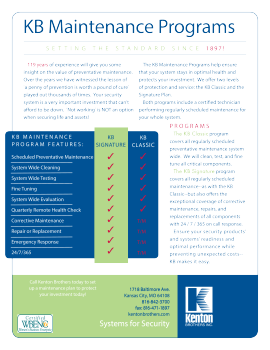
Kenton Brothers Classic and Signature Maintenance Programs…Take a Look!

Did you know that Kenton Brothers offers two maintenance programs for your security products and systems?  Our maintenance programs include a security technician performing regularly scheduled maintenance on your security systems and products.  As Gina would say, “Not working is not an option when protecting your people, property and possessions!”

Check it out!

To download a pdf of this flyer, click here!

KB Maintenance Programs2016SellSheet (1)