The True Cost of a Security Breach: Beyond the Immediate Loss
By Gina Stuelke, CEO of Kenton Brothers
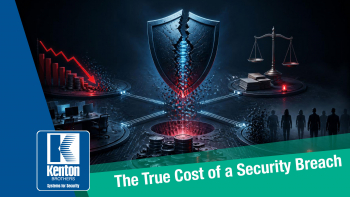 When a physical security incident happens, a break-in, a stolen laptop, an unauthorized visitor wandering a facility, the first number that comes to mind is usually the value of whatever was taken or damaged. That number is almost never the real cost.
The immediate loss is often the smallest line item in a much longer bill. Understanding the full financial picture is essential for security leaders trying to justify investment, and for anyone still treating security spend as a cost center rather than a form of risk management.
The Costs That Don’t Show Up on Day One
- Regulatory and legal exposure. Depending on the industry and what was accessed or exposed, a physical breach can trigger the same regulatory machinery as a data breach: notification requirements, fines, and audits. Healthcare, finance, and government contractors face particularly steep penalties when physical security failures lead to data or compliance violations.
- Insurance premium increases. A filed claim doesn’t just pay out once. Underwriters reassess risk at the next renewal, and a facility with a recent incident often sees premiums rise for years afterward, sometimes costing more over time than the original loss itself.
- Investigation and remediation costs. Bringing in forensic investigators, legal counsel, and consultants to determine what happened and how to prevent a recurrence adds up quickly, often before any of the underlying vulnerabilities have even been fixed.
- Operational downtime. A breach that takes a facility offline, whether for a physical investigation, equipment damage, or a full security system overhaul, has a real cost in lost productivity, missed deliveries, or halted operations. For manufacturing, logistics, or data center operators, this can dwarf the value of whatever was physically taken.
- Reputational damage. Customers, partners, and investors notice security failures, especially when they become public. Contracts with security clauses can be jeopardized, and new business development can stall while a company works to rebuild trust, particularly in industries like defense, finance, or healthcare where security posture is part of the sales conversation.
- Employee turnover and morale. A security incident, especially one involving violence, threats, or a sense that the workplace isn’t safe, has a measurable effect on retention. Replacing and training staff is expensive, and a damaged sense of safety can linger long after the physical vulnerability is patched.
- Litigation risk. If an incident harms an employee, customer, or visitor, and it can be shown that reasonable security measures were not in place, the organization can face liability claims that far exceed the original incident’s cost.
Why This Matters for Budget Conversations
Security teams often struggle to get budget approved because the ask: cameras, access control upgrades, guard staffing, visitor management systems, is compared only against the cost of the assets being protected. That comparison almost always makes security spend look like overkill, until an incident happens and the real bill arrives.
A more accurate framing compares the cost of prevention against the full cost of an incident: not just the stolen equipment, but the fines, the premium hikes, the investigation, the downtime, the reputational hit, and the legal exposure. When laid out this way, most physical security investments pay for themselves many times over just by preventing a single moderate incident.
Building the Business Case
For security leaders making the case internally, a few practical steps help:
- Document near-misses, not just full incidents. A near-miss that didn’t result in loss is still evidence of a gap, and it’s a lower-stakes way to illustrate risk.
- Loop in finance and legal early to help quantify categories like regulatory exposure and litigation risk, which security teams don’t always have visibility into.
- Benchmark against industry incident costs where available — cyber security has done this well with breach-cost reports, and physical security is increasingly following suit.
The Bottom Line
The sticker price of a stolen laptop or a broken door is rarely the number that should drive a security budget conversation. The real cost of a breach is distributed across legal, financial, operational, and human categories, and it’s almost always larger, and longer-lasting, than it first appears.
Kenton Brothers Systems for Security is a WBE-certified commercial security integrator headquartered in Kansas City, Missouri. Our services include commercial security solutions for video surveillance, access control, locking hardware, intrusion detection, mass notification, remote services, and specialty products including robotics, video analytics, and metal detection systems.
To learn more, give us a call.



Leave a Reply
Want to join the discussion?Feel free to contribute!